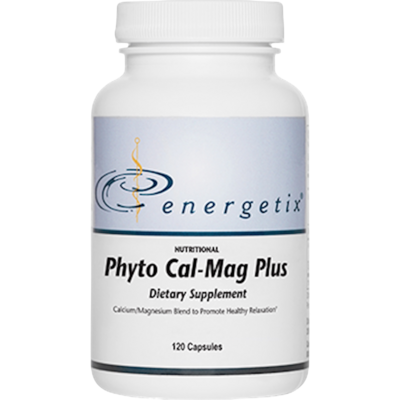
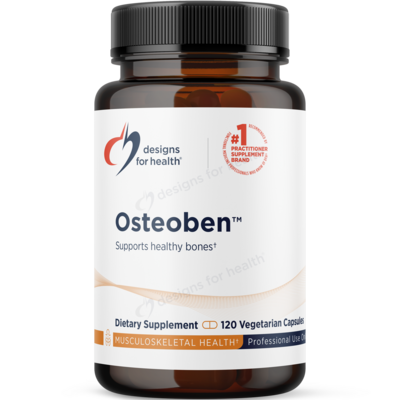
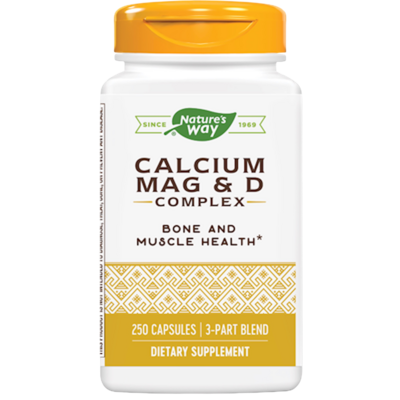
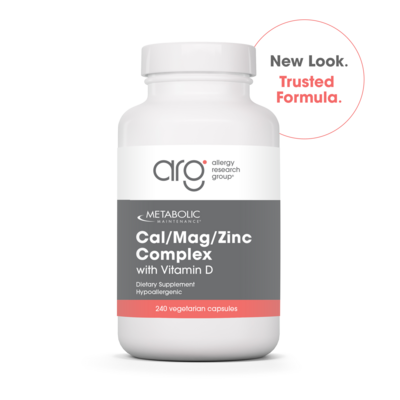
Daily support for bone strength, calcium utilization, and neuromuscular function.*
What It Does
Cal/Mag Plus with vitamin D and vitamin K2 helps maintain strong bones and teeth while supporting healthy muscle and nerve activity.* By pairing vitamin D3 with vitamin K2 (MK-7), it supports efficient calcium absorption and directs calcium to the skeleton, helping maintain vascular and tissue balance.* [1–3]
How It Works
• Calcium (as Di-Calcium Malate, 500 mg) — Provides foundational mineral support for bone density and skeletal integrity.* [1]
• Magnesium (as Magnesium Aspartate, 250 mg) — Supports healthy muscle relaxation, nerve signaling, and bone matrix formation while balancing calcium activity at the cellular level.* [2]
• Vitamin D3 (cholecalciferol, 25 mcg / 1,000 IU) — Enhances intestinal calcium absorption and supports bone mineralization and immune function.* [1,3]
• Vitamin K2 (as MK-7, 22.5 mcg) — Activates vitamin K–dependent proteins such as osteocalcin and matrix Gla protein to guide calcium into bones and away from soft tissues.* [3-5]
Who It’s For
Ideal for adults seeking daily nutritional support for bone strength, calcium metabolism, and neuromuscular balance and particularly those with low dietary intake of dairy or leafy greens.*
Special Features
• Features a balanced 2:1 calcium-to-magnesium ratio and the clinically validated pairing of D3 and K2 for optimal calcium absorption and placement.* The gentle malate form of calcium supports gastrointestinal tolerance, while MK-7 provides a long-acting form of vitamin K2 for sustained activity.*
• Confidently support bone integrity and calcium balance with a science-based blend that helps your body use calcium where it’s needed most.*
References
1. Weaver CM, et al. Osteoporosis International. 2015;27(1):367-376.
2. Castiglioni S, et al. Nutrients. 2013;5(8):3022-3033. doi:10.3390/nu5083022
3. Cashman KD, Kiely MR. J Human Nutr Dietetics. 2014;27(5):434-442.
4. Schurgers LJ, et al. Blood. 2006;109(8):3279-3283.
5. Knapen MHJ, et al. Thromb Haemostas. 2015;113(05):1135-1144.